From storms to squirrels: what causes power outages?
Published: July 17, 2026
Summary
- Most power outages are linked to a handful of known issues such as weather, wildlife contact, tree interference and equipment failure
- Toronto Hydro prioritizes safety while working to restore power as quickly as possible
- While not all outages are preventable, being prepared through emergency kits, safe behaviour and awareness can reduce impacts and help keep everyone safe
Power outages can feel unpredictable, but most have clear causes. Understanding what’s behind an outage can help you make sense of why it happened, how long one might last and what can be done to prevent it in the future.
The following are some of the most common reasons your lights go dark that Toronto Hydro sees each year.
-
Equipment failure
When this happens, crews work to locate and isolate the affected equipment and make the necessary repairs. Where possible, we’ll begin switching (transferring customers to alternate circuits) to restore power to as many customers as possible while we work on the original issue.
-
Wildlife contact
Nature can be unpredictable, especially around electrical equipment. Sometimes, wildlife encounters power equipment and that can lead to outages.
To help reduce these types of interruptions, Toronto Hydro takes preventative steps across the system. This includes regular patrols to look for signs of animal activity and installing protective guards and enclosures where needed.
While we can’t completely animal-proof our system, these steps help keep wildlife safe and your power on.
-
Vehicle collisions
Some power outages happen when a vehicle hits a power pole or other electrical equipment. When a collision affects electrical equipment, safety is always the top priority.
Once the area is safe, crews assess the damage and begin repairs. If possible, they’ll reroute power to nearby homes and businesses using alternate circuits, though customers closest to the damage may be without power until repairs are finished.
-
Dig-ins
Outages can also happen when underground equipment is accidentally damaged during digging — something often called a “dig-in.”
Because the damage is underground, repairs can be complex and time consuming. Crews typically have two options: fix the damaged cable where it is or reroute power along a different path. In some cases, they may set up a temporary solution while permanent repairs are underway.
It’s similar to discovering a burst pipe under your driveway. You need to figure out exactly what’s going on before you can fully fix it and sometimes that means putting a short-term solution in place first.
It’s also a good reminder to always contact Ontario Dig Authority before you dig to locate underground lines — it helps keep everyone safe and the power on.
-
Tree contacts
Trees can grow into or fall on lines naturally, even without storms, which can interrupt service. When this happens, crews are sent out to safely clear the branches and check for any damage before making repairs.
-
Extreme heat
Periods of extreme heat can put added strain on the electricity system, and in some cases, lead to power outages in parts of the city.
-
High winds
High winds are a common cause of outages, bringing down branches, damaging equipment or causing objects to hit powerlines. These impacts can interrupt electricity service, sometimes across multiple neighbourhoods at once.
During widespread events, restoration can take longer as crews respond to multiple locations. They work to assess damage, make areas safe and restore power as quickly as conditions allow.
-
Flooding
Flooding can lead to power outages when water damages electrical equipment. Because conditions can be complex, repairs may take longer as crews work carefully to restore power safely.
-
Freezing rain
Freezing rain can coat powerlines, trees and electrical equipment with ice. The extra weight, especially when combined with wind, can cause branches to fall or poles to come down. Ice and moisture can also impact equipment and lead to outages. During severe storms, bad road and weather conditions can make it harder for crews to reach affected areas, which may slow restoration efforts.
-
Loss of supply
Some power outages can happen when power isn’t reaching our system from Hydro One, often called a “loss of supply.”
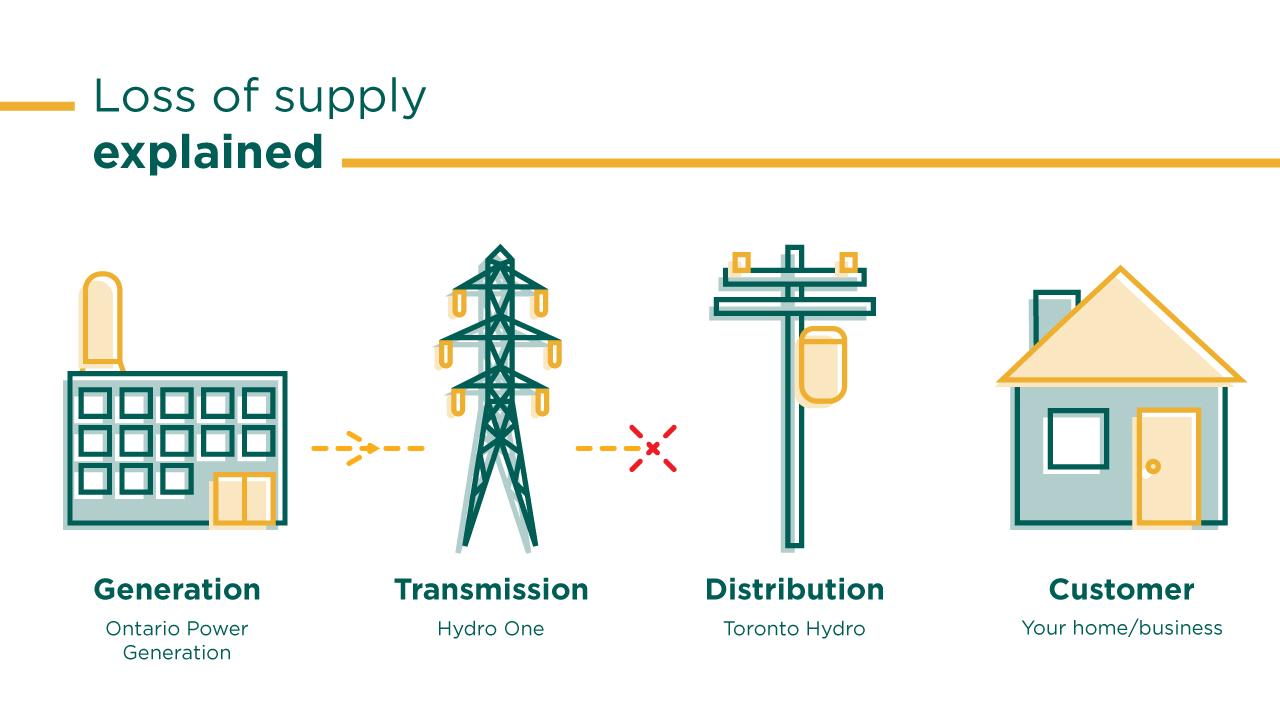
Ontario’s grid has three main steps: generation, transmission and distribution. Power is generated by organizations such as Ontario Power Generation, transmitted by Hydro One, then distributed locally to homes and businesses by Toronto Hydro.
If there’s an issue on the transmission side, it can interrupt supply to our customers. In these cases, restoration depends on when power is restored to our system. Once it is, crews work to reroute electricity where possible to get as many customers back online as they can.
How you can prepare
We work as hard as possible to prevent outages by upgrading and expanding the electricity grid to improve reliability and resiliency across the city. However, outages still can happen. If they do, our crew work as quickly and safely as possible to restore your power. In the meantime, here are a few important safety tips to keep in mind:
- Prepare a fully stocked 72-hour emergency kit, including water and non-perishable food for everyone in your household; first-aid items and medications; and basic tools and supplies such as a flashlight, batteries and a power bank to charge small electronics like cell phones
- Stay far away from any downed lines and report hazards immediately
- Unplug electronics to protect them from surges when power returns
Find more tips in our Emergency Preparedness Guide.
Experiencing an outage?
We offer several ways to help you stay informed:
- Interactive online power outage map: A visual tool with estimated restoration times
- Email and/or text message outage notifications: Personalized alerts delivered directly to customers' inboxes or mobile devices
- 24/7 phone support: Report outages or downed wires at 416-542-8000 (press 1)
- Online outage reporting and live outage chat: Share outage details and get instant updates through live chat support
Visit our Outage Hub for the full suite of outage tools and emergency preparedness resources.