The journey of electricity in Ontario
Published: July 17, 2026
Summary
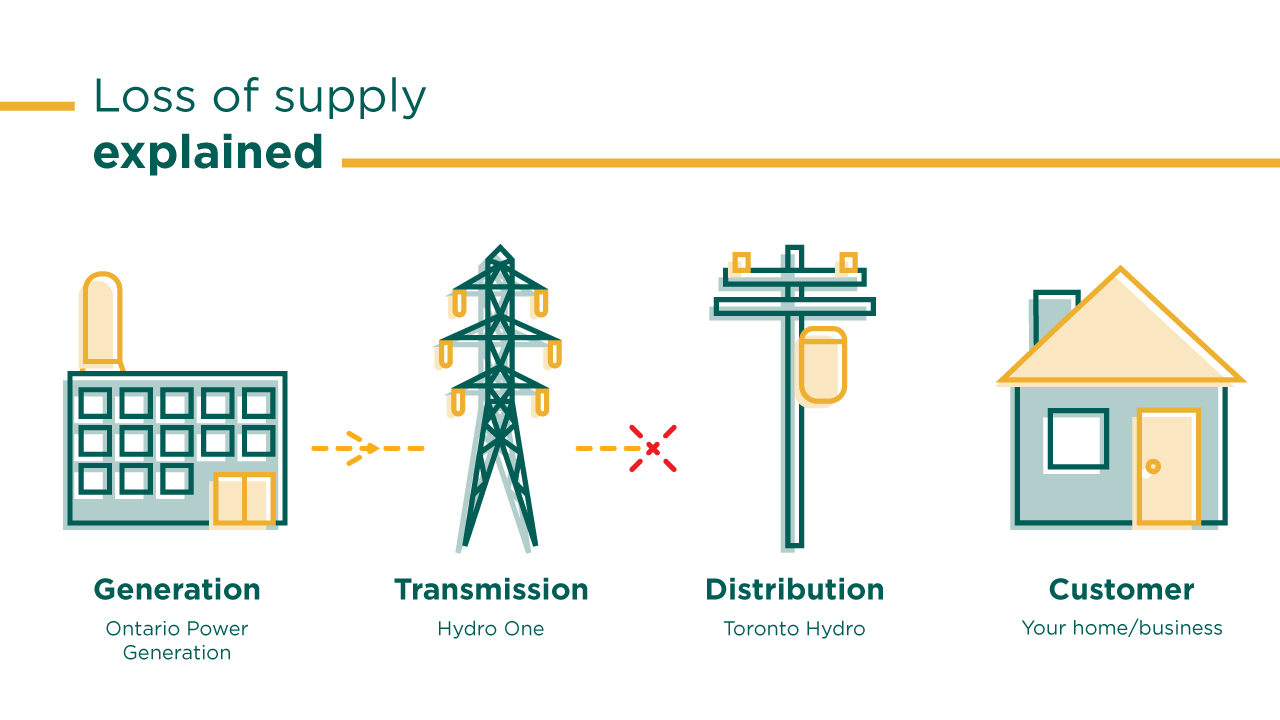
- The journey of getting power to your home or business involves electricity generation (Ontario Power Generation), transmission (Hydro One) and distribution (Toronto Hydro)
- A loss of supply happens when Hydro One is experiencing issues with its power supply and is unable to supply us with electricity
While it may seem simple and often goes unnoticed, the journey of getting electricity to your home or business involves a series of essential steps, including generation, transmission and distribution.
Behind every light switch, appliance and powered device is a vast and interconnected system working around the clock to produce, move and deliver electricity safely and reliably. Each stage plays a critical role in ensuring the power you depend on is available whenever you need it.
Here's what's involved at each stage of the process:
Generation
Nearly half of Ontario’s electricity is generated by Ontario Power Generation, a provincially-owned organization with generating stations across the province that produce electricity from nuclear, hydro and thermal energy sources.
Transmission
Once electricity is generated, it’s delivered to urban and rural areas through high-voltage distribution lines that act like highways for transmitting electricity. Hydro One — which owns 30,000 kilometres of transmission lines across 97% of Ontario — supplies electricity to Toronto Hydro.
Distribution
Toronto Hydro is responsible for the last step of the journey: distributing electricity to residential, commercial and industrial customers across Toronto.
What is a loss of supply?
A loss of supply happens when Hydro One is experiencing issues with its power supply and can’t supply us with electricity. This means we can’t deliver electricity to our customers until Hydro One fixes the issue.
For more information about why outages happen, how we restore them and what to do if one happens, visit our About outages web page.